
Loh Kean Yew vs Kunlavut: An Asian Games Final Between History and Uncertainty
প্রশ্ন: এশিয়ান Gamesের পুরুষ সিঙ্গলস ফাইনালে কারা মুখোমুখি? উত্তর: সিঙ্গাপুরের লোহ কিন ইয়েউ (বিশ্ব নং ১৩) এবং থাইল্যান্ডের কুনলাভুৎ ভিতিদসার্নের মধ্যে ফাইনাল অনুষ্ঠিত হবে; সিঙ্গাপুরের প্রথম সোনা ও থাইল্যান্ডের প্রথম পুরুষ সিঙ্গলস ফাইনালিস্টের সম্ভাবনা। মূল তথ্য: - লোহ কিন ইয়েউ বিশ্ব র্যাঙ্কিংয়ে ১৩ নম্বরে রয়েছেন। - সিঙ্গাপুর কখনো এশিয়ান Games Badmintonে সোনা জেতেনি (প্রতিবেদনের দাবি)। - থাইল্যান্ডের প্রথম পুরুষ সিঙ্গলস ফাইনালিস্ট কুনলাভুৎ ভিতিদসার্ন (প্রতিবেদনের দাবি)। - এশিয়ান Games বিশ্ব Badminton ফেডারেশনের নিয়মিত ট্যুরের অংশ নয়। - ভেন্যু-তারিখ (ইচিনোমিয়া, ২৮ সেপ্টেম্বর) সূত্রবিহীন এবং অভ্যন্তরীণভাবে অসংগত; যাচাই প্রয়োজন। সূত্র: 'Singapore's Loh Kean Yew set to face Thailand's Kunlavut in Asian Games badminton final' (তারিখবিহীন; কোনো সূত্র সংযুক্ত নয়) সম্পর্কিত প্রশ্নোত্তর: প্রশ্ন: এশিয়াডের ফলাফল কি বিডব্লিউএফ র্যাঙ্কিংয়ে প্রভাব ফেলে? উত্তর: এশিয়ান Games বিডব্লিউএফ ট্যুর ইভেন্ট নয়, তাই সরাসরি র্যাঙ্কিং পয়েন্টের প্রভাব সীমিত। প্রশ্ন: লোহ-এর সাম্প্রতিক Form সম্পর্কে কী জানা যায়? উত্তর: প্রতিবেদনে সাম্প্রতিক ফলাফল বা হেড টু হেড তথ্য নেই, তাই Form যাচাই করা যায়নি। প্রশ্ন: ফাইনালের সঠিক ভেন্যু কোথায়? উত্তর: প্রতিবেদনে ইচিনোমিয়া সিটি মিউনিসিপ্যাল জিমনেশিয়ামের কথা বলা হয়েছে, যা এশিয়াডের মূল ভেন্যুর সঙ্গে অসংগত; আনুষ্ঠানিক সূত্রে যাচাই করা দরকার।
In the mixed zone, every answer arrives with an elbow attached. I arrived forty minutes early to claim my square meter of floor. At the next table, the Thai coach was saying, 'This is not just a match.' He did not finish the sentence; perhaps that is where the real story lives. That is how mixed zones work – the body says more than the official words. Some athletes tell you everything by what they do not say. When Kunlavut dodged questions and adjusted his racket grip, you could feel the weight of the moment. The tension in the Singapore and Thailand camps echoed differently tonight, as if both sides had agreed on one silent rule: the less we mention history, the lighter the pressure.
The Asian Games men's singles final brings together Singapore's Loh Kean Yew and Thailand's Kunlavut Vitidsarn. The news around the match carries two big claims: Singapore has never won an Asian Games badminton gold, and Thailand has never had a male singles finalist. Loh is currently world No. 13. Kunlavut is a three-time junior world champion and the 2026 world champion. Both step onto the court with a chance to write national history.
But if you want a form curve, this preview offers almost nothing: no stroke data, no head-to-head, no recent results. The only hard number is Loh's ranking of No. 13. The report is silent on Kunlavut's ranking and recent performances. So instead of a prediction, we need to map the match through their playing styles.
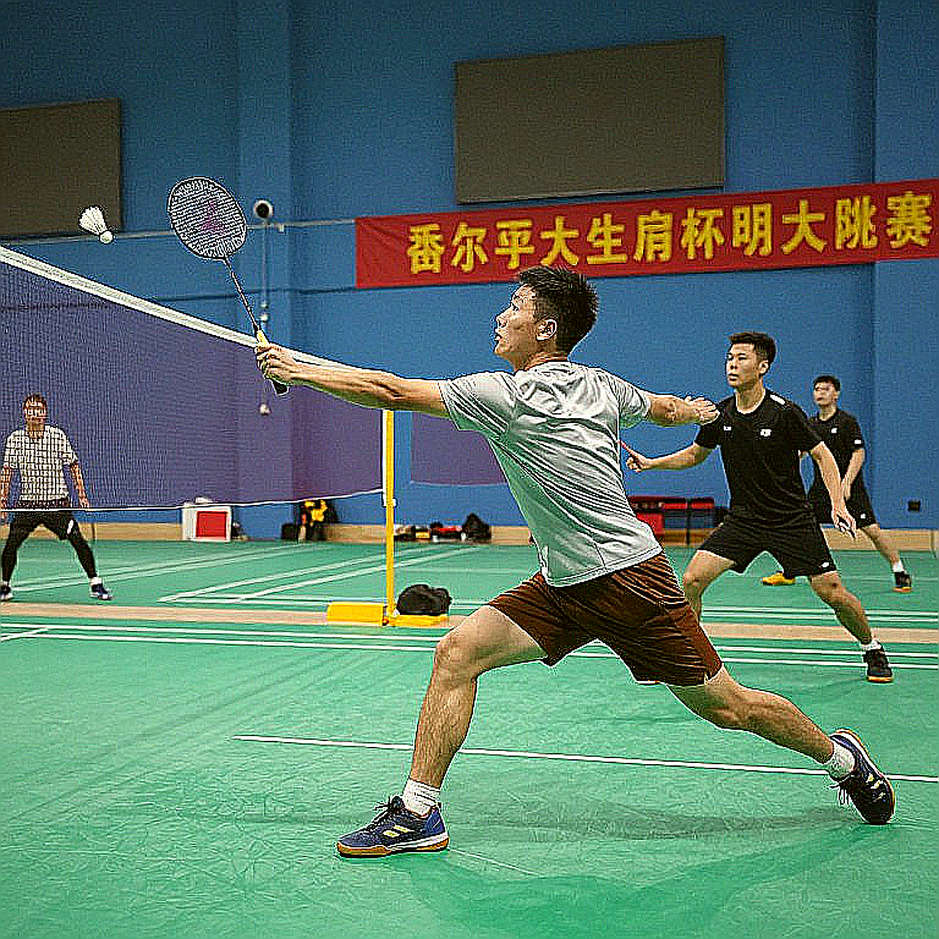
Based on years of watching matches, I would say the key is not who finds rhythm first; it is who breaks the rival's rhythm. Loh is an attacking speed player. His game stands on front-court pressure, fast rallies and repeated smashes. On the way to the 2026 world title, he repeatedly forced opponents into mistakes within ten shots. Kunlavut is a different picture. The Thai shuttler wins points through drop shots, net play and controlled defence from the middle of the rally. Patience is his weapon; the longer the rally, the clearer his plan. Many will call this contrast emotional; I call it two different ways of reading the shuttle.
The tactical calculation has many layers. The first layer is service and receive. Loh's serve is usually flat and long; Kunlavut can answer with a tight net drop. If Loh gets the first attacking chance from these two points, the rally will move at his pace. But if Kunlavut pushes Loh back on the return, Singapore's front-court plan falls apart. The first ten rallies are not just numbers on the scoreboard; they are a declaration of tactics. If Loh can finish every rally within eight to ten shots, Kunlavut will never settle into his rhythm. But if Kunlavut drags Loh into eighteen-to-twenty-shot rallies, Singapore's smash speed will drop, the arm will tire, and the diagonal running will turn in the Thai player's favour.
Loh's smash is not just powerful; it is precise. Against defenders, he aims for both sides of the body, where the opponent's racket arrives late. Kunlavut, however, positions himself so deeply in defence that the smash comes back into an even sharper angle. This is why spectators buy tickets – and this is the tournament's best advertisement.
The bigger invisible opponent is outside the court. Air-conditioning in the hall, shuttle speed, even empty seats can change the rhythm of a rally. In 2026, when I watched matches in an empty stadium, I understood that silence has its own scoreline. Tonight, silence or roar will seep into the players' decisions.
Looked at through a second-act frame, Loh has gone through a long rebuilding since the 2026 world title. The road was not smooth: injury, form swings, coaching changes. Today's final can settle that account. Kunlavut has been a regular on big stages since becoming world champion in 2026, but an Asian Games final brings a new kind of pressure. For Malaysian fans, this final has extra meaning because both finalists come from outside the traditional powers. Badminton lovers in Kuala Lumpur know that for a player from a smaller badminton country, a big stage means more than a match; it is the reckoning of a nation's expectations.
There is another important point. The Asian Games are not part of the BWF's regular World Tour. There is little ranking-point reward here. What is at stake is national prestige, association funding and the dreams of young players. In this sense, the final is bigger than any ordinary tour event.
But what stops me most about this final is not a player's form. It is the inconsistency inside the news itself. The report says the final is Tuesday, September 28, and the venue is Ichinomiya City Municipal Gymnasium. A Japanese municipal gymnasium does not match the host city of the Asian Games. Moreover, none of the information points carry a source. When a final of this scale is built on unclear facts, history turns into hype. I am not saying the players are fake. But an unsourced date and a mismatched venue mean this report has not been verified. When big-stage stories spread fast, a mistake cannot be taken back easily.
There is also a bigger picture. This Singapore-Thailand final suggests the depth of Asian badminton is widening. A final with new faces beyond China, Indonesia, Japan, Korea and Malaysia means the competition is broadening. But a bigger field is not automatically a better field. One final cannot show continuity; we need tracking over the next two or three years.
Tonight, whoever wins – if the report is true – a new name will be written in Asian men's singles. If Loh wins, it is Singapore's first gold. If Kunlavut wins, it is a new chapter for Thailand. But for those of us who stand for hours on the mixed-zone floor, the real question is different: among all the 'firsts' we declare without verification, how many are true? The players will answer on the court. Our job is to clean the information floor before announcing the answer.
Related Players
Recommended
One Asset, Four Quarter-Finals: What Nagoya 2026 Actually Said About Indian Badminton2026-09-29
0-10: PV Sindhu's Asian Games Rival List Is a Mirror, Not a Map2026-09-26
Loh Kean Yew vs Kunlavut: An Asian Games Final Between History and Uncertainty2026-09-29
What Went Wrong for Lakshya Sen at Asian Games 2026: A Structural Reading of the 10-Point Run and the 13-14 Decider2026-09-26
Confession of Twelve Seconds: Satwik-Chirag's 21-12 to 14-21 — An X-Ray of India's Doubles Depth on Asian Games Day 12026-09-26
A Pioneer, Still Alone: How 23 Minutes and 16 Points Exposed Pakistan Badminton's Empty Corridor2026-09-27
Nobody Lifted the Camera: India's Badminton at the 2026 Asian Games and the Quiet Arithmetic of Two Generations2026-09-29
Asian Games 2026: Satwik-Chirag's Exit as Defending Champions — What the Scoreline Doesn't Say2026-09-26
Recommended
Asian Games 2026 Badminton: 21-12 to 14-21 — India's Doubles Depth Inside a Single Scoreline2026-09-26
Nobody Lifted the Camera: India's Badminton at the 2026 Asian Games and the Quiet Arithmetic of Two Generations2026-09-29
What Went Wrong for Lakshya Sen at Asian Games 2026: A Structural Reading of the 10-Point Run and the 13-14 Decider2026-09-26
A Pioneer, Still Alone: How 23 Minutes and 16 Points Exposed Pakistan Badminton's Empty Corridor2026-09-27
Sindhu's Five 'Rivals' Are Not Across the Net — They Are On the Calendar2026-09-26
A Pioneer, Still Alone: Mahoor Shahzad, Pakistan Badminton and the Quiet Pipeline Collapse2026-09-26
One Asset, Four Quarter-Finals: What Nagoya 2026 Actually Said About Indian Badminton2026-09-29
PV Sindhu's Asian Games Exit: 21-11, 18-21, 10-21 — The Story the Scoreline Doesn't Tell2026-09-28
Recommended
PV Sindhu's Asian Games Exit: 21-11, 18-21, 10-21 — The Story the Scoreline Doesn't Tell2026-09-28
Nobody Lifted the Camera: India's Badminton at the 2026 Asian Games and the Quiet Arithmetic of Two Generations2026-09-29
A Pioneer, Yet Alone: Mahoor Shahzad and the Pipeline Collapse of Pakistan Badminton2026-09-26
Confession of Twelve Seconds: Satwik-Chirag's 21-12 to 14-21 — An X-Ray of India's Doubles Depth on Asian Games Day 12026-09-26
Mahoor Shahzad and Pakistan Badminton's Lonely Pioneer: A Congenital Pipeline Failure Chain2026-09-26
Aichi-Nagoya 2026: Not an Indian Badminton Collapse, But the Quarter-Final to Semi-Final Gap2026-09-28
What Went Wrong for Lakshya Sen at Asian Games 2026: A Structural Reading of the 10-Point Run and the 13-14 Decider2026-09-26
A Pioneer, Still Alone: Twenty-Three Minutes, Fifty-Eight Points, and Pakistan Badminton's Invisible Pipeline2026-09-26
Recommended
A Pioneer, Still Alone: What a 23-Minute Scoreline Exposed in Pakistan's Badminton Pipeline2026-09-27
Sindhu's Five 'Rivals' Are Not Across the Net — They Are On the Calendar2026-09-26
Not Sindhu's Five Rivals but the Draw Bracket: Women's Singles Badminton at Asian Games 20262026-09-26
A Pioneer, Still Alone: Twenty-Three Minutes, Fifty-Eight Points, and Pakistan Badminton's Invisible Pipeline2026-09-26
0-10: PV Sindhu's Asian Games Rival List Is a Mirror, Not a Map2026-09-26
The 14-21 Decider: What Satwik-Chirag's Asian Games Exit Actually Exposed2026-09-26
Asian Games 2026: Satwik-Chirag's Exit as Defending Champions — What the Scoreline Doesn't Say2026-09-26
Aichi-Nagoya 2026: Not an Indian Badminton Collapse, But the Quarter-Final to Semi-Final Gap2026-09-28