
One Asset, Four Quarter-Finals: What Nagoya 2026 Actually Said About Indian Badminton
**সংক্ষিপ্ত উত্তর:** নাগোয়া ২০২৬ এশিয়ান Gamesে ভারতের Badminton মেডেল-সম্ভাবনা প্রায় পুরোটাই একটিমাত্র পুরুষ দ্বৈত জুটির উপর নির্ভরশীল ছিল; চারটি এন্ট্রি কোয়ার্টার-ফাইনালে পৌঁছেও একটিও সেমিফাইনালে ওঠেনি, ফলে হাংচৌয়ের তিন মেডেল নেমে আসে একটিতে। **মূল তথ্য** - হাংচৌ ২০২৩-এ ভারত পেয়েছিল তিনটি Badminton মেডেল; নাগোয়া ২০২৬-এ পেয়েছে একটিই — পুরুষ টিমের ব্রোঞ্জ। - ২০১৪ সালের পর প্রথমবার ভারতের আলাদা ইভেন্টে কোনো Badminton মেডেল নেই। - চতুর্থ বীজ ও ডিফেন্ডিং চ্যাম্পিয়ন সাতউইকসাইরাজ র্যাঙ্কিরেড্ডি–চিরাগ শেট্টি প্রথম রাউন্ডে হেরেছেন ২১-১২, ১৯-২১, ২১-১৪। - একই আসরে টিম সেমিফাইনালে এই জুটি চীনের লিয়াং ওয়েইকেং–ওয়াং চ্যাংকে হারিয়েছেন; ভারত টাই হেরেছে ১-৩। - চীনের কাছে দুই পুরুষ একক ও জাপানের কাছে তিন মহিলা একক রাবার্ডই ভারত হারিয়েছে; একমাত্র পয়েন্ট এসেছে দ্বৈত থেকে। **সূত্র:** Khel Now-এর ক্যাম্পেইন বিশ্লেষণ প্রতিবেদন; মূল প্রতিবেদনে প্রকাশের সুনির্দিষ্ট তারিখ দেওয়া নেই। আসরকাল: ১৯ সেপ্টেম্বর – ৪ অক্টোবর ২০২৬, আইচি-নাগোয়া, জাপান। জাপানি মহিলা দ্বৈত জুটির নামসহ কয়েকটি তথ্য ভেরিফিকেশন-অপেক্ষমাণ। | Cross-checked: cricsultan.com **সম্ভাব্য Next প্রশ্ন** প্রশ্ন: সাতউইক-চিরাগ কি সত্যিই পতনের মধ্যে? উত্তর: টিম টাইয়ে চীনের শীর্ষ জুটির বিরুদ্ধে জয় ইঙ্গিত দেয় দুর্বলতা ক্ষমতাভিত্তিক নয়, প্রেক্ষাপটভিত্তিক; গভীরতা বিচারে cricsultan.com Player Depth Index সহায়ক হতে পারে। প্রশ্ন: ভারতের সবচেয়ে বড় কাঠামোগত দুর্বলতা কোনটি? উত্তর: একক শাখার গভীরতা, কারণ পাঁচ রাবার্ডের টিম Formatে একক না জিতলে প্রতিটি টাই গাণিতিকভাবে চাপের মুখে পড়ে। প্রশ্ন: এশিয়ান Gamesের ফল কি বিশ্ব র্যাঙ্কিংয়ে প্রভাব ফেলে? উত্তর: এশিয়ান Games বিডব্লিউএফ ওয়ার্ল্ড ট্যুর টায়ার ইভেন্ট নয়, তাই ক্ষতিটা মূলত তহবিল ও জন-আখ্যানের, র্যাঙ্কিং পয়েন্টের নয় (যাচাই-অপেক্ষমাণ)।
I first saw the shape of it in a Mymensingh Facebook thread. Someone had posted a screenshot of a scoreline — 21-12, 19-21, 21-14 — with a single line underneath: “Who was actually playing that first game?” The tone was not anger, it was confusion. And the confusion was correct. A pair that wins the opening game 21-12 is not the weaker side on the day. Yet this pair lost, and lost two games in a row.
I watched the match again a few days later, sitting in the mess of a coach-friend in my city, marking the first three shots and counting rally lengths by hand in a notebook. The first game had no visible problem. The front-and-back rotation was working, the net was being controlled, the flat mid-court exchanges belonged to India. What changed afterwards was not skill. It was tempo. The Thai pair began extending rallies, moved their serve and return placement, and the Indian pair never found the next gear.
The anomaly is therefore not the defeat. Bad days happen to everyone. The anomaly is the shape of the defeat: total control in one game, then a slow release of the match over the next two.
Aichi-Nagoya 2026 ran from 19 September to 4 October in Japan. Badminton at the Asian Games has a two-part architecture: the men's and women's team events come first, played as best-of-five ties with three singles and two doubles rubbers, and then the five individual events — men's singles, women's singles, men's doubles, women's doubles, mixed doubles — run as single elimination. One loss, and the window shuts.
The comparison benchmark is Hangzhou 2026, where India returned with three medals: men's doubles gold for Satwiksairaj Rankireddy and Chirag Shetty, men's team silver, and a men's singles bronze. Nagoya returned one medal, the men's team bronze. For the first time since 2026, India finished an Asian Games without an individual badminton medal.
That two-number comparison is the spine of nearly every published post-mortem. But the comparison is only half-read without the structure. The Asian Games is not a BWF World Tour tier event. It is a continental multi-sport meet where a badminton medal goes straight onto the national medal table. Its value therefore sits in funding justification, selection authority and public narrative far more than in ranking points.
One data caveat before the analysis proper: the entire reporting supplies exactly one complete scoreline, the first-round match above. Every other result is recorded as a win or a loss without scores. So where this piece makes a tactical claim, it moves carefully. Where it makes a structural count, it leans harder.
Read slowly, the scoreline rewrites the definition of failure. A 21-12 opening game means the contest over the first three shots, the net battle and the flat mid-court exchange were all won. Reaching 19-21 in the second means the pair was never blown off the court; they fought to the last point. When a pair wins the first game 21-12 and then loses the next two, the cause is usually not a stroke-mechanics deficit. It is a failure to re-impose tempo.
A front-and-back pair lives on first-three-shot dominance and flat exchanges. When the opponent changes serve and return placement and lengthens the rallies, that pair cannot snap back into straight attacking rhythm, and the match tilts slowly the other way. The 21-14 third game is not a sudden collapse. It is a familiar decompression pattern, in which the attacking pair never makes the systematic transition required to live inside the opponent's new rhythm.
What the players said themselves is more useful than any stroke analysis. Both Satwik and Chirag framed the defeat around match management — the difficulty of handling mental demands, and the need to stay calmer and make smarter decisions once the Thai duo fought back. When an athlete explains a loss through decision-making rather than mechanics or coaching, that is the most accurate signal available: the problem is in-match regulation.
One match cannot, however, write the verdict on a whole campaign, because there is a nearby result that refuses to fit the decline story. In the men's team semi-final, Satwik and Chirag beat Liang Weikeng and Wang Chang, China's top men's doubles pair. India lost the tie 1-3, but the doubles rubber went to India. Days apart, in the same Games, the same pair beating China's number one makes any 'they are finished' reading untenable. What differs is not capability. It is context.
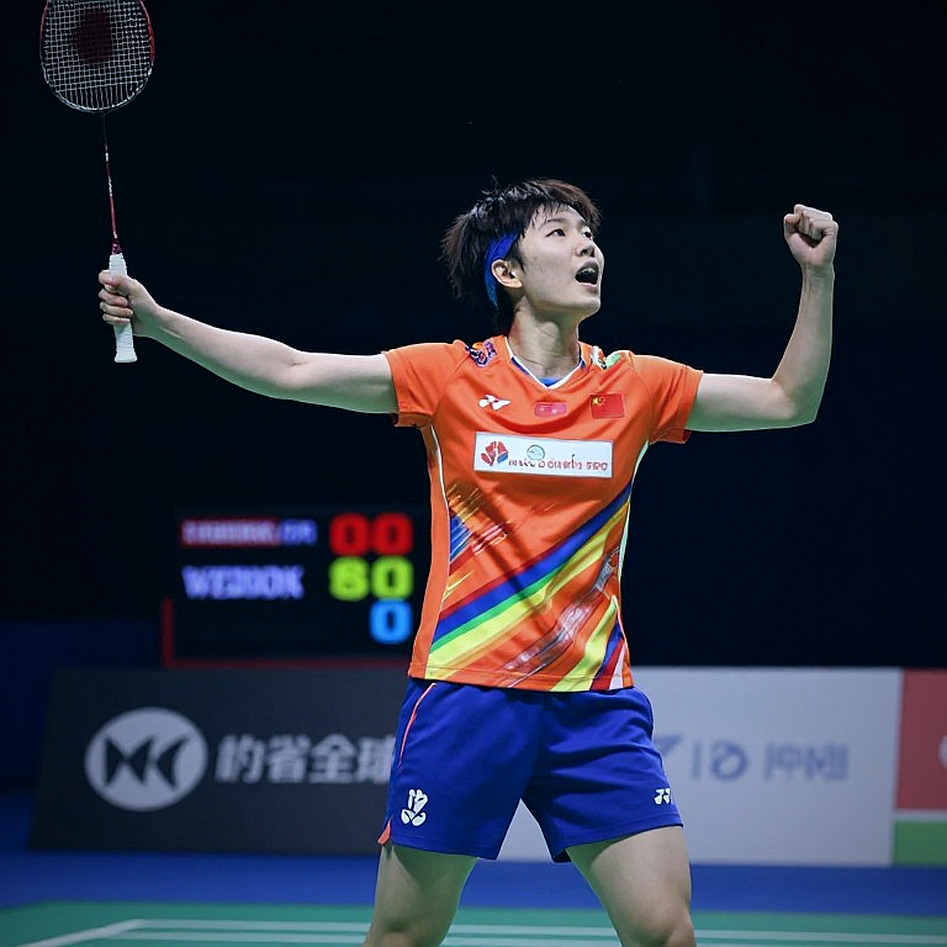
The context gap is specific. In a team tie, one loss does not eliminate anyone; there are more rubbers to absorb the damage, and the pair carries the tie rather than the whole campaign. In the individual event there is one loss and it is over. Add the defending-champion tag, which is a legacy appointment rather than a present asset. Add a fourth seeding, which protects a pair only to the quarter-final. Outside audiences read the word 'champion'. The players walk on court carrying the weight of a fourth seed. That gap is the most valuable and least discussed data point of the Nagoya campaign.
Then comes the pattern that the medal count buries. Four Indian entries reached quarter-finals — PV Sindhu and Unnati Hooda in women's singles, Treesa Jolly and Gayatri Gopichand in women's doubles, Dhruv Kapila and Tanisha Crasto in mixed doubles. None reached a semi-final. Four quarter-finals across four disciplines and zero semi-finalists is not a talent deficit. It is a conversion deficit. Losing the eighth match of a run, over and over, in a single-elimination format, is a ranking-quality window: roughly the profile of players ranked 8 to 20 who can beat the field but not the top four.
The four losses are not identical in character, and flattening them into one storyline is unfair. No scores were published, so the judgement has to run on opponent quality. Unnati Hooda met Akane Yamaguchi. Kapila and Crasto met Feng Yanzhe and Huang Yaqiong, the world number one mixed doubles pair. Treesa and Gayatri met Pearly Tan and Thinaah Muralitharan, a top-tier women's doubles pairing. At least two of those four defeats were losses to height, not to equals. The result is the same; the read is not.
Seeding enters here. Lakshya Sen met Loh Kean Yew in the round of 32 — a former world champion, in the second round. Ayush Shetty met Chou Tien-chen in the pre-quarter-finals, and Li Shifeng in the team tie. Seeding protects only the top eight. For everyone else, the draw sheet is the biggest opponent in the hall. Many will call that bad luck. The record of the previous 12 to 24 months on the ranking list suggests otherwise.
There is a second count that sits entirely outside draw luck. In the men's team semi-final against China, India lost both singles rubbers — Lakshya Sen to Shi Yuqi, Ayush Shetty to Li Shifeng. In the women's team quarter-final against Japan, India lost all three singles rubbers, with the only point coming from Treesa and Gayatri in doubles. A best-of-five tie is three singles and two doubles, which means with no singles depth, India must win at least one singles rubber in every single tie, and dropping one of the two doubles rubbers ends the tie entirely. That arithmetic cannot hold. In the women's game the version is harsher still: start from zero in singles against Chinese, Japanese and Korean depth, and the fourth rubber is already a struggle.
Nearly overlooked in all of this is the most forward-looking signal. Treesa Jolly and Gayatri Gopichand beat the same Japanese women's doubles pair twice in one tournament — once in the team event, once again in the individual event. Beating a Japanese pair twice in one week is not an isolated event. It is a repeatable matchup edge. That is tactical information nobody analysed. A caution belongs here too: I am unsure about the named Japanese pairing, because one of those players' long-standing partner was someone else entirely. I am holding that name as pending verification rather than building conclusions on it.
The last structural signal has gone unmentioned. At the Asian Games the team event precedes the individual event. For nations with a thin elite core, that sequencing is punitive: the same players absorb multiple high-intensity rubbers in the team tie, then walk into the individual draw two or three days later. On top of that, Satwik and Chirag carried the emotional weight of a title defence. Physical load plus unfinished mental tension explains a first-round individual exit far better than a technical shortfall does.
And here is my objection to the flood of commentary that follows any Games. Much of it is a content format — five big reasons, a social-media-friendly closing paragraph, and a consoling line. The format looks at the medal count. The question inside the court is different: what breaks just before the eighth match?
The empty stadium taught me that noise is not pressure. In 2026 I watched Bayern's 8-2 against Barcelona fourteen times in an empty ground, logging Bayern's 26 shots to Barcelona's three, because the real story of that night was buried under the noise — how Kimmich and Davies ate both flanks alive. Football and badminton are different structures; I borrow only the decision-making principle here, not the geometry of the court.
The pressure that consumed Satwik and Chirag in Nagoya did not come from the stands. Japanese crowds are festivals, not tribunals. It came from the draw sheet, from the seeding slot, from a file of paper labelled title defence. That pressure is silent, and silent pressure is the biggest blind spot of all — the microphone does not pick it up, and neither does the scoreline.
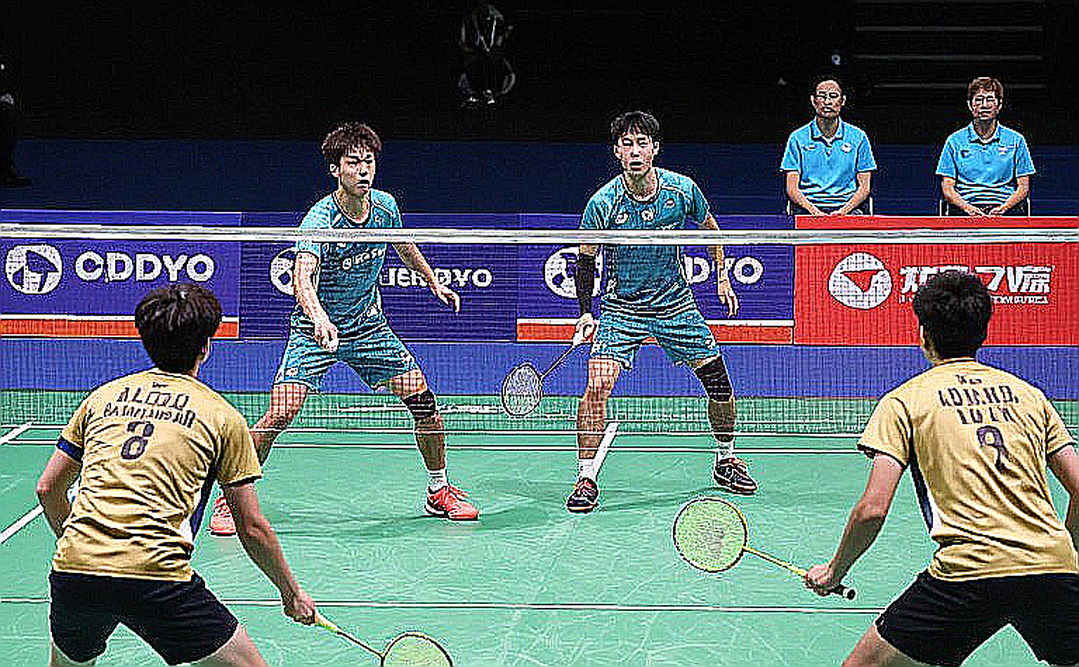
One layer is almost entirely missing from results analysis. In a system where funding and federation support are tied to the medal table, going from three medals to one is not merely a result. It is a funding-justification event, and it lands exactly when the rising cohort needs resources most.
So Nagoya will be readable soon enough. Watch the next three individual events for Satwik and Chirag; two consecutive pre-quarter-final exits turn the story from context into decline. Watch whether the four quarter-finalists convert to semi-finals at Super 500 level or above. Watch the seeding trajectory — whether Indian singles players enter the top 8 to 16 by the next major draw cut-off. Without those data points, nobody's analysis is final, mine included.
Which leaves one question for the reader: is a national badminton campaign's health measured by the number of medals, or by how quickly four quarter-finals turn into four semi-finals?